
Yore Lore: Michael Borowski
Introducing Michael Borowski
As Assembly of Dust heads into Chicago, I wanted to give you a better sense of who Michael Borowski is beyond the keys. Michael is one of those players who brings both deep musical intelligence and real feel. He came up through classical music, found his way into improvisation through George Winston and Phish, and has spent the last 25 years carving out his own voice in the jam world. What struck me in talking with him was how seriously he listens, how much he values emotional truth over flash, and how naturally he thinks about music as a living, breathing conversation. Here’s an edited piece of our recent conversation.
⸻
A Conversation with Michael Borowski
Reid: For most musicians, there’s a song or album that first pierces your consciousness and makes you aware of music in a deeper way. For me it was Pete Seeger. What was that for you?
Michael Borowski: My path was a little different. My whole life up until college, I was basically a classical guy. My mom had me around classical music from the time I was four, so Beethoven and Debussy were really my first musical world.
The bridge out of that was George Winston. He opened something up for me because he connected the discipline and feeling of classical music with improvisation and a more personal kind of playing. In the back of my mind I was also hearing bands like the Beatles and Led Zeppelin, but George Winston was the first artist who made me think beyond classical piano. Then I heard Phish in the ’90s and that really changed everything. I started thinking, maybe I’m a band guy now. What got me was the improvisation, but also how composed the music was. Everybody was listening to each other. It wasn’t just soloing for the sake of soloing. It felt musical, interactive, alive.
Reid: So what was it about Phish that really captured you?
Michael: It was the combination of technical ability, musicality, and improvisation. Growing up, I always listened to the music first and the lyrics second. With Phish, it was never really about the lyrics for me. It was the architecture of the songs, the way they played off each other, and the feeling that anything could happen while still making musical sense.
Reid: You studied music formally too, right?
Michael: Yeah. I went to Temple University in Philadelphia and studied music composition, with an emphasis on piano performance.
Reid: One thing I’ve always been interested in is the balance between interpretation and identity, especially for someone like you. You’ve got classical training, which can be more rigid, and now you’re in a world where improvisation matters. How do you think about composition versus freedom?
Michael: I really believe in not playing the same show or even the same song the same way twice. You still have to honor the music. There are signature parts, important voicings, moments that define a song. But when it comes to improvisation, that should be alive. That’s where the band becomes itself. That’s something I take pride in with Splintered Sunlight too. We’re playing Grateful Dead music, sure, but we’re not trying to impersonate anybody. Our guitar player isn’t studying Jerry’s licks, and I’m not studying keyboard parts note for note. We’re trying to hit the spirit of the music while still sounding like us.
Reid: When a jam starts to evolve, what are you listening for?
Michael: Sometimes it’s musical, sometimes it’s visual, sometimes it’s just a feeling. A glance, a rise in intensity, a shift in phrasing. I’ve played with Butchie for 25 years, so a lot of it is instinct at this point. We can feel when something’s building, when it’s winding down, when it’s about to lift. You don’t always think your way there. Sometimes you just know. And the mood can change fast. You can take a happy song and make it suddenly feel sad just by shifting the emotional center of the jam. That’s what makes it exciting.
Reid: Keyboard players can shape the emotional weather of a band in ways the audience may not even consciously realize. Do you feel that role?
Michael: Definitely, and I see it as a joy. I’m always listening for the spaces I can fill. Keyboard can change the mood, the harmony, the texture, the energy. It can make the same song feel completely different. I’ve listened to versions of your music with and without keys, and it really changes the emotional frame. Not better or worse, just different. That’s what I love about the instrument. It can subtly guide the feeling of a performance without always stepping into the spotlight.
Reid: Somewhere along the line, you also found Strangefolk and Assembly of Dust. Where did that fit into your musical journey?
Michael: That was a big turning point for me. A friend who introduced me to Phish also turned me on to Strangefolk. What hit me was that I was hearing this band that had the musical openness I loved, but also lyrics and harmonies that really mattered. Up to that point, I think I associated jam bands with strong musicianship but not necessarily with words that pulled me in. Then I heard Strangefolk and thought, wait, this is different. There’s storytelling here. There’s poetry here. That opened another door for me. It also made me go back and hear other bands differently. I started listening more deeply, including to the Grateful Dead, and realized it wasn’t just about exploratory playing. There was songwriting there too. So in a real way, your music was part of my musical growing up.
Reid: Having dug into both Strangefolk and Assembly of Dust, how do you hear the difference between them?
Michael: They’re connected because they come from the same writer, but Assembly of Dust feels a little more open to broader musical exploration, especially from a keyboard standpoint. There’s a little more room there, maybe a different kind of lift. What I respond to in both bands is the same basic thing though: storytelling, musically and lyrically.
Reid: As you’ve been learning this material more closely, have you discovered things you didn’t notice before as a listener?
Michael: Absolutely. The biggest thing is the lyrics. Since I naturally hear music first, I’ll sometimes miss words until I’ve lived with a song for a while. But once the lyrics start sinking in, they change how I play. If I connect emotionally to what a song is saying, or to what I think it’s saying, it affects my touch and the way I support the song.
Reid: Are there particular songs that jumped out at you?
Michael: “Cluttered” is a big one for me. That one really speaks to me, both musically and lyrically. Every day I listen, I feel like I have a new favorite, but that one hit me hard.
Reid: Do you prefer live playing or studio work?
Michael: Live, for sure. I’ve done recording, but I’m not a huge fan of it. Once that red light comes on, I can get in my head. I’m a perfectionist, but not in a way that’s ever fully satisfied, so studio work can become endless. Live music is different. You play what you play, and that’s the truth of the moment. I like that.
Reid: What’s your ideal keyboard setup on the road?
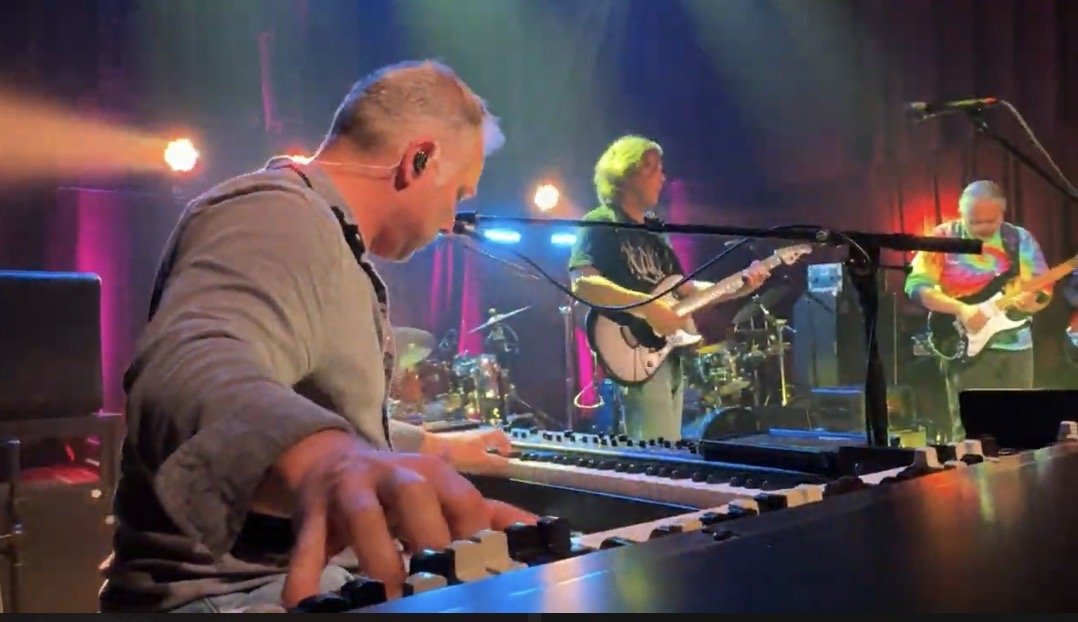
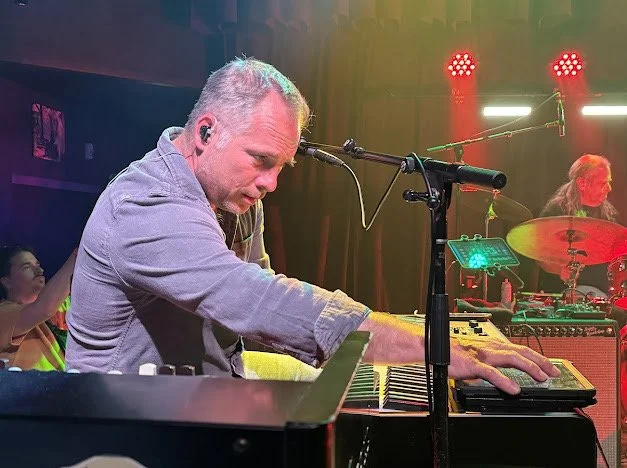
Michael: I’m a meat-and-potatoes keyboard player. I love the classic sounds: piano, Hammond, Rhodes, Clavinet. For these Chicago shows, the backline is basically my dream setup. It’s a Yamaha CP88 and an organ with a Leslie. That’s home base for me.
Reid: Last one. As a player coming into this music, what does it mean to hear, from me at least, that I want you to bring your own voice to it?
Michael: It’s refreshing. These songs are your babies, so to hear you say, “Be yourself, don’t worry about copying what somebody else did,” that helps a lot. It makes me relax and trust my instincts. That’s the best place to play from. If I’m relaxed, I can listen. If I can listen, I can contribute. That’s when the music gets real.
⸻
Michael is a serious musician, but more than that, he’s a listener. The more we talked, the more it was clear that what drives him is not showing off, but tuning in: to the song, to the band, to the room, to the moment.
That’s exactly the kind of player you want beside you.
Chicago, here we come.